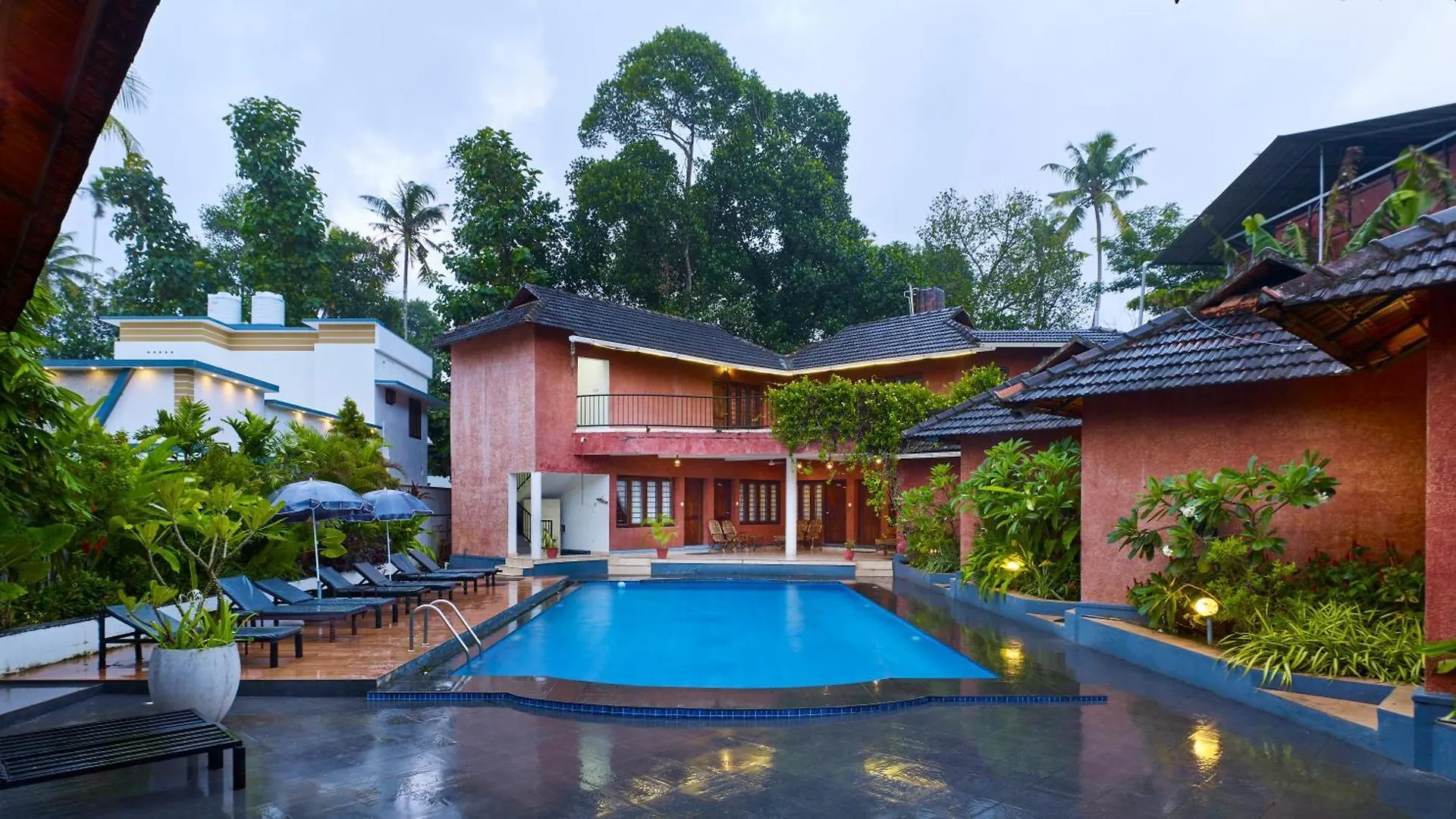
India's hospitality landscape spans centuries of architectural tradition - from Mughal palaces to Portuguese colonial villas and contemporary resort design rooted in regional craft. These 14 design hotels across India are selected for their spatial identity, architectural distinction, and the way they reflect the cultural geography of their location - whether that's a cliff-edge Kerala resort, a Greek-Egyptian themed estate in Pune, or a Varanasi palace surrounded by jasmine fields.
What It's Like Staying in India
India is not a single destination - it is a layered architectural and cultural experience that shifts dramatically between regions. The Kerala backwaters, Goa's colonial coastal strip, Varanasi's sacred riverbanks, Maharashtra's inland resort belt, and Tamil Nadu's temple cities each operate on entirely different rhythms. Crowds peak sharply between October and March, when almost every heritage property and beach resort across the country fills up, and rates at design-forward hotels can climb steeply. Staying in well-positioned, architecturally distinct properties gives travelers a genuine sense of place - something that chain hotels consistently fail to deliver across India's most visited regions.
The logistical reality of travel in India means that airport distances matter more than in most countries - properties claiming 'central location' can still mean 60 km from the nearest international airport. Design hotels here tend to sit in semi-rural or coastal settings, which adds to their atmosphere but requires planning around transfers.
Pros:
- India's design hotel segment draws on an unmatched diversity of regional architecture - temple craft, Mughal geometry, Portuguese colonial verandas, and Kerala wood-carving traditions
- Staying in a well-chosen property dramatically enhances how you experience the surrounding landscape, whether coastal Goa, sacred Varanasi, or Kerala's waterways
- Many design properties in India include cultural programming - river aarti ceremonies, Ayurveda treatments, classical music evenings - that standardized hotels simply do not offer
Cons:
- Remoteness is common: many architecturally notable properties are 20-60 km from railway stations and airports, making transfers both time-consuming and costly
- India's peak travel window is narrow, and top design hotels across Goa, Kerala, and Rajasthan book out weeks in advance between November and February
- Internet reliability, even in upscale properties, can be inconsistent in coastal Kerala and rural Maharashtra compared to urban business hotels in Pune or Chennai
Why Choose a Design Hotel in India
India's design hotel category sits in a distinct space between heritage palace conversions, boutique coastal resorts, and contemporary properties that use local craft as a design language. Unlike standard business hotels, these properties typically invest in spatial storytelling - Corinthian columns in Pune, teak and coir interiors in Kerala, antique four-poster beds in Varanasi. Room sizes at Indian design resorts are often significantly larger than equivalents in European boutique hotels, particularly in resort formats where private balconies, gardens, and outdoor rain showers are standard. The price differential between a standard international chain and a well-designed Indian resort of comparable quality is often around 30%, making design-led properties genuinely competitive on value.
The trade-off is that design hotels in India rarely occupy city-centre locations - they prioritize ambiance over transit convenience, and guests arriving late or departing early will need to factor in transfer logistics that urban business hotels eliminate entirely.
Pros:
- Architecturally distinct properties in India frequently include cultural and wellness facilities - Ayurveda centres, palace spas, yoga terraces, and Ganga-view dining - that are integrated into the design rather than added as afterthoughts
- Compared to similarly rated international chains, Indian design resorts offer larger room footprints, outdoor spaces, and more personalized programming at competitive rates
- Many properties sit within historically significant or naturally exceptional settings - mango orchards, beachfront lagoons, cliff edges - that become part of the stay itself
Cons:
- Design-led properties in India often lack the operational consistency of international chain hotels - room quality, housekeeping standards, and F&B execution can vary within the same property
- Remote or semi-rural locations mean that dining outside the hotel may require a vehicle; guests at coastal Kerala or Alibaug resorts are largely captive to in-house restaurants
- Peak-season noise from weddings, corporate events, and group bookings can affect smaller resort properties that double as event venues - a common feature in India's resort segment
Practical Booking & Area Strategy
India's geography makes city selection the most consequential booking decision. Goa and Kerala properties book out fastest - particularly beachfront and island resorts between mid-November and late January, when domestic and international demand converges. For cultural depth, Varanasi's Nadesar area (near the Ganges, away from the ghats' morning crowds) offers a calm base with direct access to the city's most significant rituals. Alibaug, just 90 km from Mumbai by road or ferry, functions as a genuine coastal escape from Maharashtra's urban density - though the Chhatrapati Shivaji International Airport is around 89 km away, so arrive prepared. Mathura is strategic for Agra-bound travelers who want to avoid Agra's limited upscale accommodation options; Bharatpur Bird Sanctuary is also reachable from here. Sriperumbudur near Chennai and Hassan in Karnataka are lower-profile locations but offer accessible entry points to South India's heritage circuits - Mysore is within reach from Hassan, and the Chennai-Bangalore corridor is well-connected from Sriperumbudur. Goa's Arossim Beach sits on the quieter South Goa coastline, away from the concentrated tourist activity of Baga and Calangute in the north.
Design Hotels in Kerala & South India
Kerala and Tamil Nadu's design hotel offering ranges from cliff-top beach resorts and island cottages to spa-centered garden retreats and historically rooted city properties. These are properties where the physical environment - backwaters, beaches, temple towns - shapes the architectural and experiential identity of the stay.
-
1. Deshadan Cliff & Beach Resort,Varkala
Show on map


 Check-infrom 12:00 until 23:59Check-outuntil 12:00
Hurry – almost gone at this price!
fromINR 4880
-
2. Poovar Island Resort
Show on map


 Check-infrom 14:00 until 23:59Check-outuntil 11:00
Rooms filling fast – secure the best rate!
fromINR 6985
-
3. Hotel Aida
Show on map


 Check-infrom 13:00 until 23:59Check-outfrom 10:00 until 11:00
Rooms filling fast – secure the best rate!
fromINR 3349
-
4. Vedic Village Sriperumbudur Formerly Known As Citrus Hotel
Show on map


 Check-infrom 12:00 until 23:59Check-outuntil 12:00
Best price guarantee
fromINR 4593
-
5. The Pearl
Show on map


 Check-infrom 12:00 until 12:30Check-outuntil 12:00
Just a few rooms left at the best rate!
fromINR 4401
Design Hotels in Goa, Maharashtra & Central India
Goa's beach resort corridor, Maharashtra's inland and coastal escapes, and Madhya Pradesh's historic cities produce a very different design hotel typology - larger resort formats, event-capable properties, and urban hotels with strong architectural identities that reflect the westernized and Mughal-influenced layering of this part of India.
-
6. Itc Grand Goa, A Luxury Collection Resort & Spa, Goa
Show on map


 Check-infrom 15:00 until 23:59Check-outuntil 12:00
Hurry – almost gone at this price!
fromINR 9760
-
7. Varanda Do Mar
Show on map


 Check-infrom 14:00 until 23:59Check-outuntil 12:00
Just a few rooms left at the best rate!
fromINR 6315
-
8. Taj Alibaug Resort & Spa, Maharashtra
Show on map


 Check-infrom 14:00 until 23:59Check-outuntil 12:00
Just a few rooms left at the best rate!
fromINR 20477
-
9. The Corinthians Resort
Show on map


 Check-infrom 14:00 until 23:59Check-outuntil 11:00
Best price guarantee
fromINR 9473
-
10. Effotel By Sayaji Indore
Show on map


 Check-infrom 12:00 until 23:59Check-outuntil 10:00
Rooms filling fast – secure the best rate!
fromINR 5358
Design Hotels in North India & the Heritage Circuit
Uttar Pradesh's sacred and historic cities - Varanasi, Mathura, Agra's proximity - form the backbone of India's heritage travel circuit, where architecture and spirituality define the sense of place. Design hotels here are not aesthetic exercises; they are set within genuinely historic environments where the building and its surroundings are inseparable from the experience.
-
11. Taj Nadesar Palace
Show on map


 Check-infrom 14:00 until 23:59Check-outuntil 12:00
Hurry – almost gone at this price!
fromINR 54349
-
12. Brijwasi Lands Inn
Show on map


 Check-infrom 12:00 until 23:59Check-outuntil 12:00
Just a few rooms left at the best rate!
fromINR 8420
-
13. Radisson Salem
Show on map


 Check-infrom 14:00 until 23:59Check-outuntil 12:00
Hurry – almost gone at this price!
fromINR 3923
Smart Travel & Timing Advice for Design Hotels in India
India's peak travel season runs from October to early March, when temperatures are manageable across most of the country and the major festival calendar - Diwali, Christmas, and New Year - drives occupancy at design and heritage hotels to near 100% in Goa, Kerala, and Rajasthan. Book Goa and Kerala coastal properties at least 8 weeks in advance for travel between mid-December and late January. The Varanasi and Mathura heritage corridor is quieter between April and June but significantly hotter - Nadesar Palace's shaded orchards and pool make it more functional in warm months than most Varanasi properties. For Pune, Indore, and Salem - which are less dependent on beach or festival seasonality - last-minute bookings of 2-3 weeks out are often feasible outside of long Indian national holiday weekends. A minimum of 3 nights is worth building in at any resort-format property - Poovar Island, ITC Grand Goa, and Taj Alibaug all have programming and transfers that don't make sense for single-night stays. Shoulder season (September and early October, and mid-February to March) offers some of the best price-to-availability ratios across India's design hotel market, particularly in Kerala where humidity drops and coastal conditions improve.